Arunachal: ‘Caring for the Caregivers’ Held in Naharlagun
The invite-only programme brought together caregivers, psychologists, journalists, police personnel, activists and community leaders to discuss burnout, resilience and mental wellbeing.
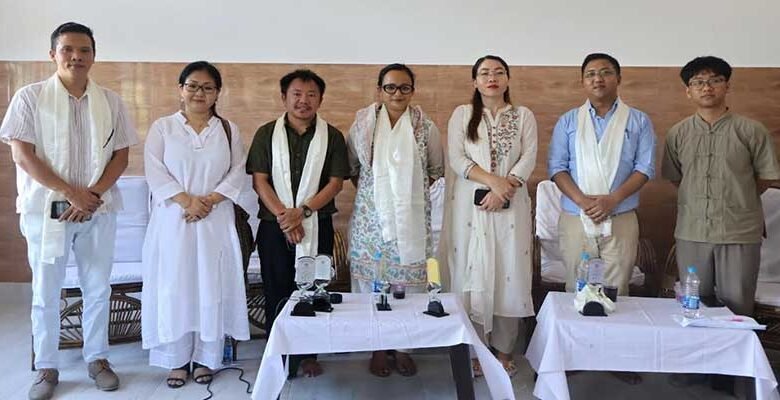
NAHARLAGUN- AP QueerStation, in collaboration with Oju Mission and The Calm Space, organised an invite-only programme titled “Caring for the Caregivers” in Naharlagun, bringing together people from diverse professions to discuss mental health, burnout and resilience among those engaged in caring for and serving others.
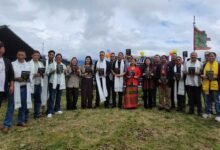
The programme was attended by psychologists, journalists, police personnel, environmentalists, activists, development practitioners, social workers and community leaders. It focused on the often-overlooked emotional burden faced by people who routinely support vulnerable individuals and communities.

Opening the programme, Oju Mission Chairperson Anya Ratan shared her personal experiences as a caregiver and the challenges of leading a care institution. She spoke about the emotional, financial and personal pressures that frequently remain unseen by society.
Recalling the COVID-19 pandemic, Ratan described the uncertainty of ensuring the safety and wellbeing of children under her care and acknowledged the support provided by well-wishers and volunteers during the crisis. She said the difficulties had strengthened her commitment to serving others with compassion, while stressing that caring for others must also include caring for oneself.
Attending the programme as Chief Guest, women’s rights activist and Arunachal Pradesh Women’s Welfare Society (APWWS) President Adv. Jarjum Ete highlighted the pressures faced by people working in the social sector, particularly women leaders who have spent decades serving communities.
She said caregiving often involves criticism, emotional exhaustion and societal expectations, while compassion, resilience and a sense of purpose help caregivers continue their work. She urged caregivers to prioritise their physical and mental wellbeing to sustain their service to others.
Guest of Honour Niri Chongrowju, Member of the Arunachal Pradesh State Commission for Protection of Child Rights (APSCPCR), welcomed the initiative as a platform for discussing mental health, inclusivity and caregiver wellbeing.
Speaking on the rights and dignity of transgender persons, he referred to legal and policy measures, including the Transgender Persons (Protection of Rights) Act, 2019, the National Council for Transgender Persons, the SMILE Scheme and the National Portal for Transgender Persons. He called for equal dignity, respect and opportunities regardless of gender identity.
The first panel discussion, moderated by Wanggo Socia, brought together senior journalist Indu Chuku, Itanagar Police Station Officer-in-Charge Inspector Rina Sonam, environmental activist Adv. Ebo Mili, social activist Tadak Nalo and AP QueerStation founder Sawang Wangchha.
Chuku spoke about the emotional demands of journalism in Arunachal Pradesh, where reporters often work with limited resources while covering tragedies, conflicts and other sensitive issues. She called for greater recognition of the mental toll such work can take.
Inspector Sonam reflected on the psychological burden faced by police personnel who regularly encounter crime, violence and human suffering. She highlighted the challenge of balancing empathy with professional duties while maintaining emotional resilience.
Mili stressed that mental health deserved the same attention as physical health and said ignoring emotional wellbeing could have serious consequences. He encouraged activists and community leaders to build genuine resilience instead of suppressing their emotional struggles.
Nalo shared his experience of neglecting mental wellbeing until it began affecting his physical health and work. He emphasised the need to maintain a balance between mental and physical health and said open conversations could help reduce stigma.
Representing the LGBTQIA+ community, Wangchha spoke about the emotional impact of discrimination, bullying and the struggle for acceptance. He also raised concerns over restrictions affecting blood donation by gay and bisexual men, calling for policies and public attitudes to be guided by scientific evidence rather than prejudice.
The panel also discussed the meaning of safe spaces. Participants identified family, friendships, silence and personal reflection as sources of emotional support, while Wangchha stressed the importance of inclusive community spaces where LGBTQIA+ people can experience dignity, acceptance and belonging.
A second panel discussion, moderated by Tomo Habung, featured mental health professionals Dr. Yuma Narah, Dr. Leeyir Ete, Dr. Tadar Amar, Mayuri Handique and Pimpy Tachung.
Dr. Narah discussed burnout, healing and resilience, arguing that healing often requires support rather than isolation. Drawing on her research with LGBTQIA+ communities, she said resilience should not be understood as suppressing emotions but as learning to grow through adversity with support from others.
Clinical psychologist Dr. Ete explained the distinction between burnout and depression. She said burnout is often associated with prolonged external stress, while depression may involve deeper and more complex factors. She encouraged healthy expression and processing of emotions.
Dr. Amar highlighted the role of creativity, art and artistic expression in supporting mental wellbeing. He spoke about the potential of art therapy as a healing tool and encouraged people to seek professional counselling when emotional difficulties become overwhelming.
Handique discussed the effects of chronic stress on the body and mind and urged participants to recognise early warning signs of burnout. She said resilience also involves recognising when rest and recovery are necessary.
Clinical psychologist Tachung highlighted that mental health professionals are themselves vulnerable to emotional distress. She explained the role of clinical psychologists in assessment, diagnosis and therapy, while noting that they do not prescribe medication.
Delivering the vote of thanks, Wangchha said the programme had intentionally been kept invite-only to create a small and safe environment where participants could speak openly and learn from one another.
He thanked Oju Mission, the panellists, moderators, volunteers, partners and participants, and acknowledged the support of the Mariwala Health Initiative (MHI) in organising the programme.
The discussions highlighted a broader concern: professionals and community leaders working in high-stress and care-oriented roles are often expected to remain resilient without adequate space to acknowledge their own emotional needs. Participants stressed that recognising burnout and seeking support are important for sustaining long-term service to communities.
The programme concluded with participants committing to foster safe spaces, promote mental wellbeing and strengthen recognition that caregivers and frontline workers also require care, support and compassion.