Arunachal: CAU Pasighat Holds Workshop on Scientific Sugarcane Farming
College of Agriculture, CAU Pasighat organised a two-day workshop for 100 farmers on scientific sugarcane cultivation and value-added agriculture for sustainable livelihoods.
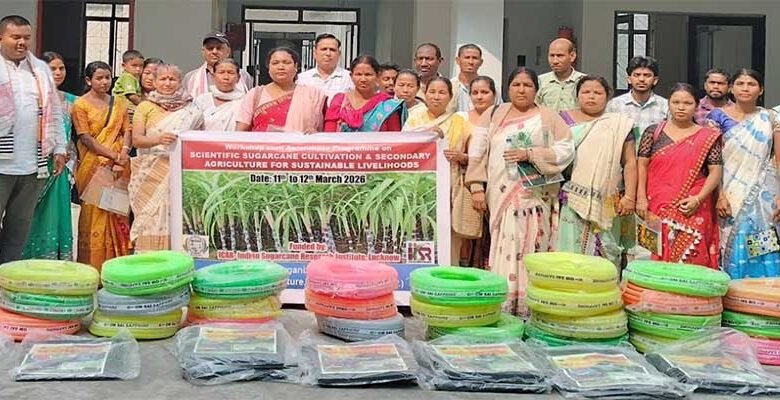
PASIGHAT- A two-day workshop-cum-awareness programme on “Scientific Sugarcane Cultivation and Secondary Agriculture for Sustainable Livelihoods” was organised by the College of Agriculture, Central Agricultural University (Imphal), Pasighat, Arunachal Pradesh, from March 11 to 12.
The programme, attended by 100 farmers, aimed to enhance technical knowledge and practical skills related to scientific sugarcane cultivation and secondary agricultural activities that can support sustainable rural livelihoods. The workshop was funded by the ICAR–Indian Sugarcane Research Institute, Lucknow, under the North Eastern Hill (NEH) component, highlighting efforts to strengthen sugarcane-based farming systems in the region.

The programme began with an inaugural session where Dr. Gireesh Chand, the organising secretary, delivered the introductory address. He highlighted the potential of sugarcane cultivation in the North Eastern Region, particularly in Assam and Arunachal Pradesh, citing favourable agro-climatic conditions, abundant rainfall, and fertile soils as key advantages.
Also Read- Two Army Personnel Killed in Arunachal Road Accident
He emphasised the need for farmers to adopt improved production technologies and diversify into secondary agricultural activities to enhance income and ensure sustainable rural development.
Dr. Sanjay Swami, Dean of the College of Agriculture, CAU (Imphal), Pasighat, delivered a lecture on the significance of sugarcane cultivation in the North Eastern Region and its contribution to strengthening the rural economy. He noted that sugarcane is not only an important commercial crop but also a source of employment generation and value-added products.
Several technical sessions were conducted during the programme. Dr. Rajib Das delivered a lecture on land preparation and planting methods in sugarcane, covering conventional and mechanised approaches. He discussed improved planting techniques, appropriate spacing, selection of quality planting material, and mechanisation options that can help improve productivity and reduce labour costs.
Also Read- China builds border villages near Arunachal: Army
Dr. Hari Kesh spoke on the importance of hybrid and improved sugarcane varieties, explaining how high-yielding and disease-resistant varieties suitable for the North Eastern Region can improve crop yield and sugar recovery.
Plant protection aspects were addressed by Dr. R. C. Shakywar, who discussed major insect pests and diseases affecting sugarcane cultivation in the region. He also explained integrated pest management (IPM) strategies aimed at reducing crop losses while limiting reliance on chemical pesticides.
Dr. Mahesh Kumar spoke about the nutritional and health benefits of sugarcane juice, describing it as a natural energy drink rich in essential nutrients. Dr. Pushpendra Kumar discussed how sugarcane cultivation can create additional employment opportunities through processing and value addition, including products such as jaggery and sugarcane juice.
Also Read- Court Sentences Man to 20 Years in POCSO Case
Dr. L. Geetarani highlighted the economic importance of sugarcane cultivation and its potential to significantly enhance farmers’ income through diversified agricultural activities.
The workshop also featured an interaction session with local stakeholders and progressive farmers. Mr. Putul Gogoi, a progressive farmer, shared his practical experiences and noted that the agro-climatic conditions of Dhemaji district in Assam are particularly suitable for sugarcane cultivation.
Organisers said the programme helped improve farmers’ knowledge and motivation to adopt scientific production technologies and value-addition practices. The workshop is expected to contribute to promoting sustainable agricultural development and strengthening sugarcane-based livelihoods in the North Eastern Region.