Arunachal: NCC Cadets Explore Nyishi Culture in Kamle
NCC cadets attending the ongoing camp at JNV Megdong visited Megdong village in Kamle district under the Vibrant Village Programme to learn about Nyishi culture and rural life.
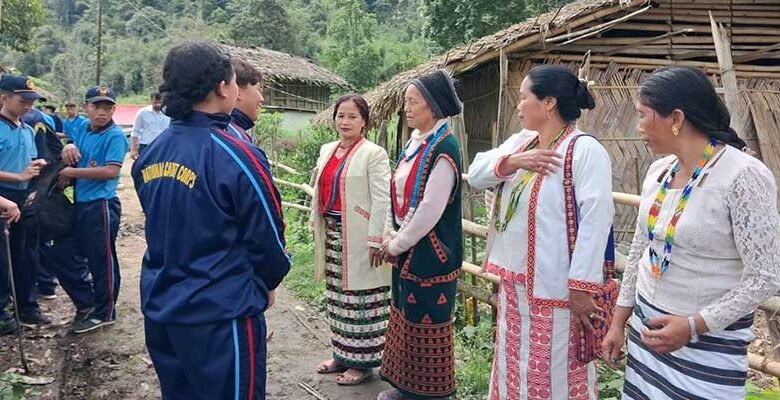
KAMLE- NCC cadets attending the ongoing NCC camp at Jawahar Navodaya Vidyalaya (JNV), Megdong, visited Megdong village in Arunachal Pradesh’s Kamle district as part of the Vibrant Village Programme, aimed at promoting cultural awareness, community engagement, and exposure to rural life.
The visit was organised to provide cadets with an opportunity to interact directly with local communities and gain insight into the traditions and lifestyle of indigenous tribes in the state. Most residents of Megdong village belong to the Dong title of the Nyishi tribe, one of the major indigenous communities of Arunachal Pradesh.

The programme began with a cleanliness drive conducted under the Swachhata Abhiyan. NCC cadets participated in cleaning the government school premises in the village, highlighting the importance of civic responsibility, hygiene, and community service. The activity also encouraged interaction between cadets and villagers in a collaborative environment.
Also Read- NCC’s Vibrant Village drive reaches Meche Marde
Following the cleanliness campaign, cadets engaged with village residents to learn about the customs, traditions, and social practices of the Nyishi community. Villagers shared details about their cultural heritage, traditional lifestyle, and relationship with nature and community-based living.
Located amidst hills and agricultural landscapes, Megdong village offered cadets a close look at rural life and the continued preservation of indigenous identity in the region. Cadets observed traditional attire, local customs, and aspects of daily life that reflect the cultural continuity of the Nyishi community despite increasing modernisation.
Also Read- NCC Cadets Visit Belo Under Vibrant Village Programme
Organisers said the programme aimed to sensitise students to India’s cultural diversity while encouraging respect for tribal heritage and sustainable living practices. The visit also allowed cadets to understand the importance of preserving indigenous knowledge systems and traditions.
The programme was conducted under the supervision of the Commanding Officer of 1 AP BN NCC, along with Associate NCC Officers (ANOs), CTO Ajay, and PI staff members, who coordinated the activities and interactions throughout the visit.
Officials associated with the camp said such outreach initiatives form an important part of youth development by combining education, discipline, social awareness, and cultural understanding. Participants described the visit as a meaningful experience that strengthened their appreciation for the diverse cultural heritage of Arunachal Pradesh and India.