Nationwide Launch of PM Dhan Dhaanya Krishi Yojana Inspires Farmers Across Arunachal Pradesh
The event marked a historic milestone in the Government of India’s mission to strengthen farmers’ income, promote self-reliance in pulses, and advance sustainable agricultural practices.

PASIGHAT/ NAMSAI/ BASAR- The nationwide launch of the Prime Minister Dhan Dhaanya Krishi Yojana (PMDDKY) by Prime Minister Narendra Modi through virtual mode witnessed enthusiastic participation across multiple districts of Arunachal Pradesh. The event marked a historic milestone in the Government of India’s mission to strengthen farmers’ income, promote self-reliance in pulses, and advance sustainable agricultural practices.
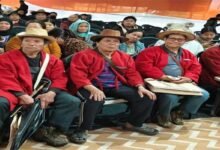
At Khupa, the Krishi Vigyan Kendra (KVK) Anjaw organized the live webcasting of the Prime Minister’s address at the Minister Bungalow Hall. The programme saw participation from 127 farmers and farm women.

Dr. Debasis Sasmal, Senior Scientist & Head, KVK Anjaw, highlighted the importance of PMDDKY and its role in improving productivity and farmers’ livelihoods. Chief Guest Songam Dimwa (BJP Mandal President, Hayuliang) and Guest of Honour Mohanso Gambre (District Kisan Morcha President) appreciated the government’s focus on reaching remote farmers.
Also Read- NERIST organises Bamboo Shoot Value Addition Program for villagers
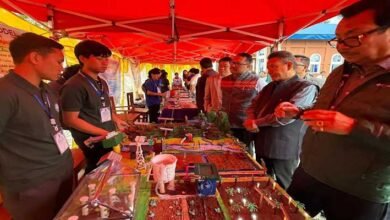
Following the Prime Minister’s address, KVK scientists conducted technical sessions on improved Rabi crop varieties, value addition, drip irrigation, and natural farming practices. Demonstrations on protected cultivation, packaging, and sealing techniques were also held to encourage farmers to adopt innovative methods for better returns.
At Namsai, the KVK Namsai organized an awareness programme for live viewing of the launch along with discussions on improved agricultural practices. The session aimed to enlighten farmers about the new schemes and the benefits of GST 2.0 reforms for the agriculture sector.
The programme was attended by Chow Jenia Namchoom, Zilla Parishad Member, and 159 farmers from nearby villages. Dr. Utpal Barua, Senior Scientist & Head, KVK Namsai, introduced the objectives of the event, while subject matter specialists discussed Rabi crop cultivation, pest management, and the benefits of central and state schemes.
Also Read- Workshop on Sustainable Muga & Ericulture Boosts Tribal Livelihoods held in Pasighat
Chief Guest Mr. Namchoom urged farmers to adopt technical and entrepreneurial approaches in agriculture to maximize profits and utilize government schemes effectively. The event concluded with discussions on Rabi crop planning and distribution of vegetable seed kits.
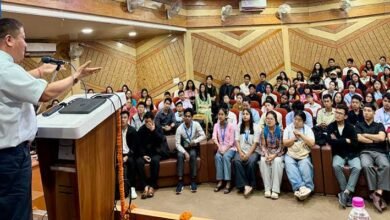
At Pasighat- Similarly, the KVK East Siang organized a live webcasting of the nationwide launch, coupled with a farmers–scientists interaction session. The event was graced by Ninong Ering, MLA of Pasighat, as Chief Guest, and Dr. A. Herojit Singh, Dean of the College of Horticulture and Forestry, as Guest of Honour.
Experts briefed farmers on the National Pest Surveillance System (NPSS), Natural Farming, and improved practices for pulses and oilseeds. Over 250 farmers attended the event, where vegetable seeds were distributed to promote crop diversification and nutritional security.
Also Read- Arunachal Governor Flags Off Walong Day Commemoration Motorcycle Expedition
MLA Ninong Ering praised the initiative, emphasizing its potential to make agriculture more profitable and appealing to youth. DAO Shri Opang Moyong and Prof. A. Herojit Singh underlined the importance of innovation, research, and convergence among departments for last-mile delivery of benefits and sustainable intensification.
The simultaneous celebrations across Arunachal Pradesh reflect a strong commitment to realizing the vision of Atmanirbhar Krishi (self-reliant agriculture). Through the PMDDKY and allied schemes, farmers are being equipped with improved technologies, input support, and market linkages.
From Anjaw to East Siang and Namsai, these programmes demonstrate the collective effort of KVKs, scientists, and policymakers to transform agriculture into a more resilient, technology-driven, and income-generating sector for rural India.