Arunachal: Press Day at APU Highlights Credibility Crisis
At APU Pasighat, officials and experts stress ethics, credibility, and responsible journalism in the era of misinformation and AI.
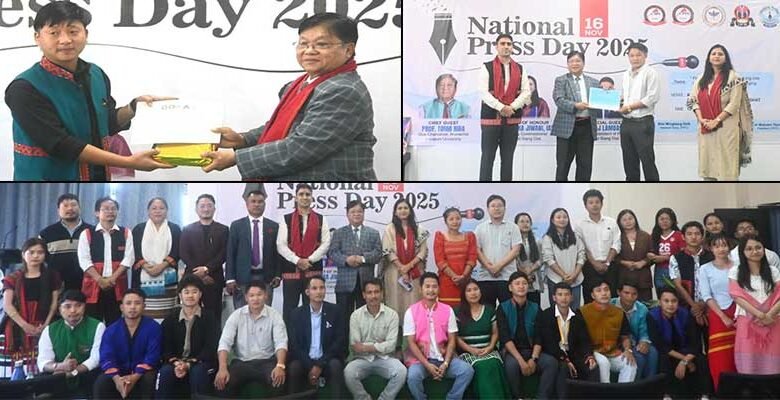
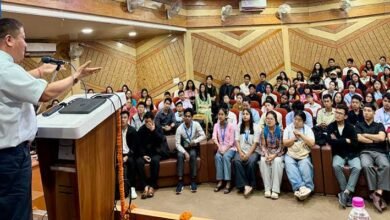
PASIGHAT- Arunachal Pradesh University (APU), Pasighat, observed National Press Day with a comprehensive programme jointly organised by the Pasighat Press Club (PPC), the Department of Mass Communication and the District Information and Public Relations Office. The event centred on the evolving responsibilities of journalism and the ethical challenges confronting the media landscape.
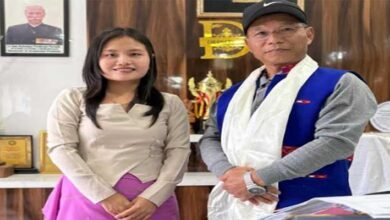
Vice Chancellor Prof. Tomo Riba, who attended the programme as Chief Guest, described the media as the “mouthpiece of society.” He said journalism must extend beyond event reporting and remain rooted in truth, fairness and public accountability. He stressed that the credibility of journalism depends on the sincerity and integrity of its practitioners.

Prof. Riba noted that in an era defined by rapid technological shifts, journalists play a crucial role in helping citizens navigate complex issues and in holding institutions accountable.
Also Read- Arunachal’s Nishanlu Kri Wins Gold in MA Sociology
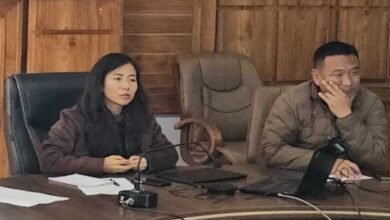
Guest of Honour and Deputy Commissioner of East Siang, Sonalika Jiwani, delivered an address that underscored the dangers of sensationalism. She warned that the chase for popularity often leads to distorted reporting and misinformation. Credibility, she argued, must come from rigorous fact-checking and sensitivity.
Drawing from administrative experience, she cautioned that unverified information—particularly on social media—can cause widespread harm. Jiwani urged journalists to prioritise ethical reporting, especially in cases involving children and trauma victims, and reminded them to respect privacy and obtain consent before coverage.
Also Read- DC Reviews Panggo–Jorging Defence Road Progress
She also appealed to the Pasighat Press Club to consider group insurance schemes for media persons, citing the physical and emotional risks of journalism. Encouraging students, she urged them to aspire beyond local reporting and cited documentary filmmaker Abhinav Pandey’s work, which contributed to Supreme Court intervention in an environmental case, as an example of journalism’s transformative potential.
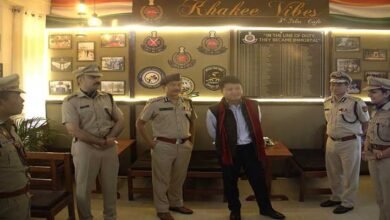
East Siang Superintendent of Police, Pankaj Lamba, described journalists as the “first responders of democracy.” While police respond to emergencies on the ground, journalists, he said, respond to informational crises.
He warned that misinformation can spread faster than verification, triggering panic, violence or reputational damage. “Fact-checking is not optional; it is a duty,” he added.
Also Read- Local Body Polls Announced in Arunachal Pradesh, Here is All Details
Lamba noted that technologies such as AI and deepfakes are reshaping media ecosystems, but only ethical reporting can safeguard public trust. He expressed the district police’s commitment to transparency and cooperation with the press.
Pasighat Press Club President Maksam Tayeng reaffirmed the organisation’s commitment to ethical journalism. He said the club will strictly enforce guidelines to prevent misreporting, particularly in sensitive cases involving women and children.
Dr. Prem Taba, Head (In-charge) of the Mass Communication Department, discussed how journalism has shifted from the Information Age to the “Attention Age,” where journalists must act as verifiers and sense-makers amid overwhelming volumes of data. He highlighted verification and clarity as central to credibility and informed that the department conducted an essay competition on “The Evolving Nature of Media in the Age of Artificial Intelligence” as part of the celebrations.
In the competition, Domong Mibang (MA Mass Communication) secured the first prize, followed by Kangkeng Modi (MA Sociology) and Otik Borang (MA Mass Communication). Consolation awards were given to Omem Tayeng (M.Com) and Jyoti Bacha (MA Mass Communication).
The event also recognised media workers for their contributions, with Toram Melong (IPR, PPC) awarded Best Worker of Pasighat Press Club and Opak Regon named Second Best Dedicated Worker. Media houses associated with PPC were also felicitated.
A workshop titled “Media Ethics, Ground Work & Problems Faced by Reporters during Field Work” engaged students and professionals in discussions on the contemporary challenges of journalism.
The programme began with floral tributes to late media pioneers Taro Chatung and V. Ravindran, followed by a welcome address from PPC General Secretary Mingken Osik.
Faculty members of APU, administrative staff, students, media professionals, district officials and PPC members attended the day-long event.