Arunachal: Padma Shri Historian Leads Heritage Tour in Tirap
A three-day heritage tour in Tirap district brings renewed focus on Ahom-era history, archaeological sites, and the prospects of heritage-led tourism.
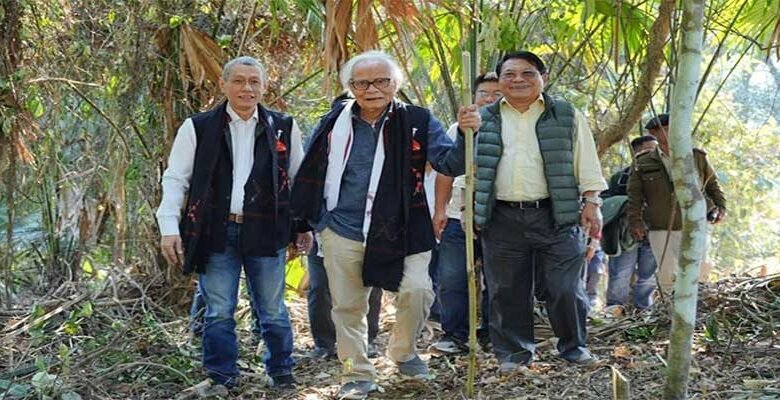
KHONSA- Wangki Lowang, Arunachal Pradesh Minister for Environment and Forest, Geology, Mining and Minerals, and DoTCL, hosted Padma Shri awardee and eminent Assamese historian Professor Jogendra Nath Phukan on a three-day heritage tour of Tirap district from January 15 to 18. Professor Phukan, 94, was accompanied by members of his research team, Dhiraj Phukan and Dipak Phukan.
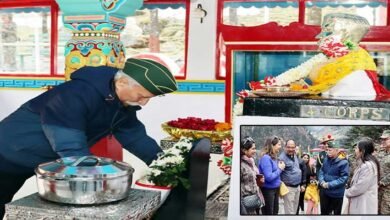
On January 16, the delegation visited Sumsi village to examine a site traditionally believed to be the burial place of the Rajmao, the mother of the 20th Ahom king Jayadhwaj Singha. The visit coincided with the eve of January 17, a date historically associated with the Rajmao’s death in 1662.

According to the translated Ahom Buranjis by historian Surya Kumar Bhuyan, Jayadhwaj Singha fled Garhgaon during the Mughal invasion led by Mir Jumla in 1662 and took refuge in the Namsang hills along with his mother, who later died of fever.
Also Read- Arunachal Pushes Cultural Exchange via Tourism Drive
At Sumsi, the team observed a large isolated earthen mound locally known as Chopha Mangrup, regarded by villagers as sacred and believed to be a royal Maidam.
Minister Lowang stated that archaeological experts would be engaged to conduct a scientific assessment of the site in consultation with Professor Phukan. If the historical significance is confirmed, the state may consider developing the location as a heritage and tourism destination.
Also Read- 108 Ambulance Saves Tourist After Cliff Accident
The second day of the tour, January 17, focused on the villages of Namsang and Subang. At Namsang, the delegation examined five ancient scripted earthen pots known locally as Ngolo or Kolo. Each pot stands about two feet tall and weighs between 14 and 15 kilograms.
One inscription was deciphered as Mohong, meaning “salt” in the Tai Ahom language, suggesting their use in salt storage or production. Though first documented in 2020 by Nocte Digest, the inscriptions had remained undeciphered until this visit. The team also visited the old Namghar at Namsang.
Also Read- Two Kerala Tourists Drown in Sela Lake Tragedy
At Subang village, the delegation inspected the historic salt well Moran Sum, which was developed for tourism in 2019. Historically, salt produced by the Nocte community was extensively traded with the Ahoms and neighbouring tribes, and control over salt resources was a recurring source of conflict.
These disputes came to an end between 1696 and 1714 during the reign of Ahom king Rudra Singha, when Hote (Latha Khunbao), the chief of Namsang, Borduria and Laptang, embraced Vaishnavism after initiation by Sri Ram Ata and was renamed Narottam.
The tour concluded with a dinner hosted at the minister’s residence on January 17, attended by the ADC and AC of Deomali, ZPMs of Deomali and Soha blocks, the Executive Engineer (Power), and other dignitaries. The delegation departed Tirap on January 18.