Arunachal: Anjaw Administration destroyed 1,850 Acres illicit Poppy Cultivation, in 5 Years
DC warned that disciplinary action would be initiated against government officials found addicted to opium under CCS Rules.
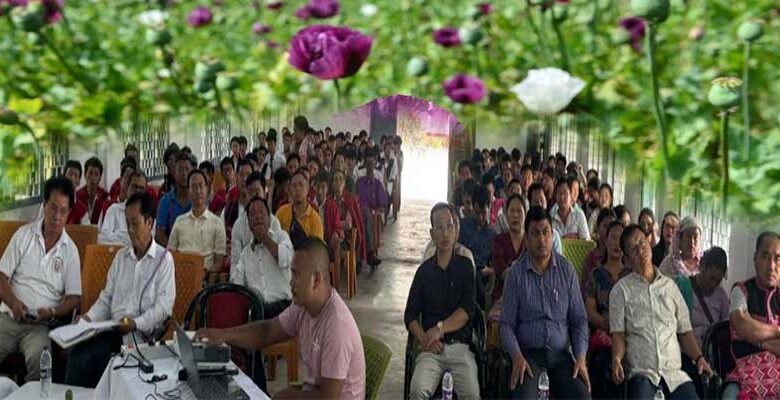
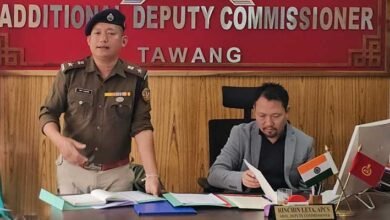
HAYULIANG– In a strong push against drug abuse and illegal Poppy cultivation, the Anjaw District Administration today organised a co-ordination-cum-awareness programme against illicit poppy farming, chaired by Deputy Commissioner Millo Kojin.
DC Kojin made a clarion call to the community, stating that opium (Kani) is not part of Mishmi culture or tradition, and urged CALSOM members, intellectuals, and youth to lead from the front in eliminating the menace. He warned that disciplinary action would be initiated against government officials found addicted to opium under CCS Rules.

Also Read- Awareness Programme on Natural Farming Held at Lungla; Over 100 Farmers Trained
Superintendent of Police Anurag Dwivedi reiterated that strict legal action will be taken against individuals engaged in poppy farming under the NDPS Act. He called for a united effort between the administration, police, and community leaders to ensure complete eradication.
Dy. SP Habung Sama elaborated on legal provisions and revealed that 1,850 acres of illicit poppy cultivation have been destroyed in Anjaw in the past five years, with multiple criminal cases registered against offenders.
The awareness drive also featured sessions on health hazards of drug abuse, alternative livelihoods, and government schemes.
Also Read- 7-Day Training on ‘Entrepreneurship Development through Piggery Farming’ Concludes at Pasighat
Dr. Sogim Tayang (SMO/DSO) cautioned that addiction often begins with casual experimentation, while officers from SJETA and Agriculture urged people to adopt sustainable farming, horticulture, and fisheries as viable alternatives.
Community organisations including CALSOM and the Women Welfare Society lauded the district’s efforts and pledged grassroots support in spreading awareness and promoting de-addiction.
The programme ended with a collective resolution to make Anjaw a drug-free district, blending strict enforcement with community-driven reform.