Arunachal SUMP Protests Turn Violent in Pasighat; NHPC Office, Police Station Set Ablaze
Violence erupted after a 12-hour bandh opposing the proposed 11,200-MW Siang Upper Multipurpose Project, with protesters demanding the release of detained activists, withdrawal of security forces and a halt to survey activities.
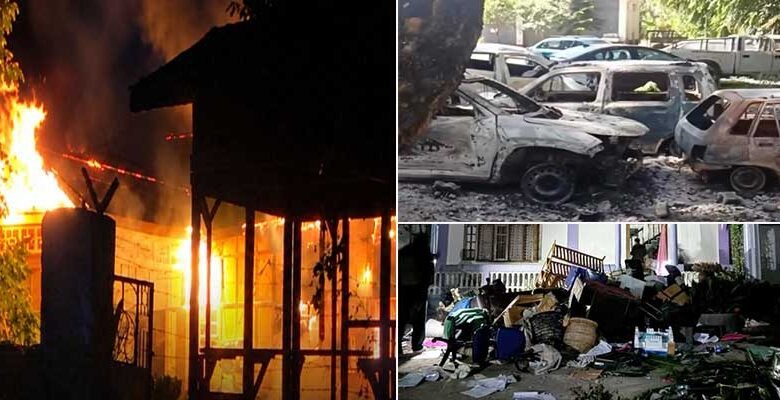
PASIGHAT: Protests against the proposed 11,200-megawatt Siang Upper Multipurpose Project (SUMP) turned violent in Arunachal Pradesh’s Pasighat on Friday night, with an NHPC office, a police station and several police vehicles set ablaze, while the residences of two local MLAs and the state BJP president were vandalised.
The violence followed a 12-hour bandh called by several organisations across Siang, Upper Siang and East Siang districts. Protesters were demanding the release of around 10 detained activists, reinstatement of suspended village heads, a halt to pre-feasibility report (PFR) surveys and related activities, and the withdrawal of security forces deployed in connection with the proposed project.

The incident has intensified the debate over the SUMP, which remains at the preliminary investigation and pre-feasibility stage. While local communities have raised concerns about displacement, ecological damage, ancestral land and indigenous livelihoods, the state government has highlighted the project’s broader significance in the context of water management and developments upstream on the Yarlung Tsangpo, known as the Siang in Arunachal Pradesh.
Also Read- Siang Dam Protest Turns Tense in Arunachal, Several Injured
Violence follows daytime bandh
According to East Siang Deputy Commissioner Jayanti Pertin, the bandh remained largely peaceful in Pasighat during the day. However, tensions escalated after the official shutdown ended at 5 pm, when hundreds of protesters reportedly continued the agitation, blocked the highway and refused to disperse despite efforts by the local magistrate and security personnel to persuade them.
After approximately two hours of unsuccessful negotiations, tear gas was used to disperse the crowd. Officials said protesters subsequently resorted to stone-pelting, injuring police personnel and other officials. The situation escalated further at around 11 pm, leading to arson and vandalism that continued into the early hours of Saturday.
Pasighat Deputy Superintendent of Police Tony Tatak, who was among those injured, said the NHPC office in the High Region area and a police station in the same locality were set on fire. Seven to eight police vehicles were also reportedly torched. Authorities were assessing the full extent of the damage.
The residences of Pasighat West MLA Ninong Ering, Mariyang-Geku MLA Oni Panyang, and Arunachal Pradesh BJP president Kaling Moyong were vandalised. The office of the Adi Bane Kebang, the apex body of the Adi community, was also ransacked.
Also Read- Arunachal Soldier Lance Naik Ebet Paloh Martyred on Duty in North Sikkim
Chief Minister condemns violence, calls for talks
Chief Minister Pema Khandu strongly condemned the attacks on Saturday and urged protesters to pursue their concerns through dialogue.
“I strongly condemn such violent protests and urge everyone who has concerns regarding the SUMP project to come and sit for talks instead of resorting to such means,” Khandu said.
He added that while protesting was a democratic right, it should remain within limits and should not cause harm to people or damage property.
The Arunachal Pradesh Congress Committee also condemned the violence while demanding an independent inquiry into the use of tear gas against protesters.
Police, meanwhile, dismissed certain social media claims circulating after the clashes, including a report alleging a death caused by tear gas, as fake news.
Also Read- Tawang to Host International Tourism Mart 2026 from October 28
Situation brought under control
The situation in Pasighat reportedly remained tense until around 4 am on Saturday before gradually returning under control by noon. Eight protesters sustained minor injuries and received first aid, according to the available account. No arrests in connection with the night’s violence had been reported as of Saturday’s initial updates, although the authorities continued to maintain a heightened security presence.
The larger question: development and community consent
The latest violence has brought renewed attention to the challenges surrounding the proposed Siang Upper Multipurpose Project. The government has linked the project to water management and strategic concerns arising from upstream developments in Tibet, while opponents have called for survey activities to stop and for greater consultation with affected indigenous communities.
The immediate challenge for the administration is to maintain law and order while addressing concerns about land, livelihoods, environmental consequences and the participation of local communities in decisions affecting their future.
The project remains at a preliminary stage, but the escalating protests demonstrate that public consultation and trust will be critical to any further progress. The coming days will test whether the government and community representatives can establish a dialogue that addresses these concerns and prevents further confrontation.