Arunachal: Gaon Burahs Take Wildlife Protection Pledge in Sangram
A Statehood Day workshop in Sangram brought Gaon Burahs, civil administration and police together, culminating in a collective pledge to promote wildlife conservation and responsible governance.
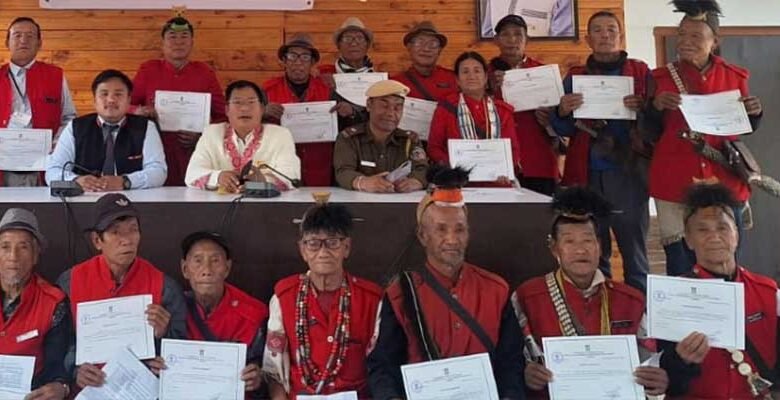
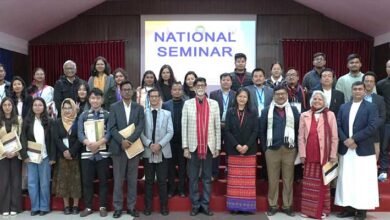
SANGRAM- A one-day workshop for Gaon Burahs was organised at the Conference Hall of the Sub-Divisional Officer’s office in Sangram on February 24 as part of the 40th Statehood Day celebrations, bringing together traditional village leaders and administrative officials to discuss governance and conservation responsibilities.
The programme, led by Sub-Divisional Officer Philip Tayeng, was attended by Circle Officer Agam Komut of Nyobia and Officer-in-Charge Shanti Paleng of the local police station. Officials said the initiative aimed to strengthen grassroots administration and improve coordination between traditional institutions and the civil administration.

Also Read- Viral Video Sparks Row at Anini Resort in Dibang Valley
During the technical sessions, participants discussed the role of Gaon Burahs in village administration alongside key legal frameworks such as the Assam Frontier (Administration of Justice) Regulation, 1945 and the Arunachal Pradesh Civil Courts Act, 2021. The deliberations focused on clarifying legal authority, responsibilities and mechanisms for cooperation among Gaon Burahs, police and civil authorities.
A significant outcome of the workshop was a collective Wildlife Protection Pledge, where participating Gaon Burahs committed to refraining from hunting and consumption of wild animals and to promoting biodiversity awareness in their respective villages. Organisers described the pledge as a step towards integrating traditional leadership structures with modern conservation priorities.
Also Read- Governor Attends Pran Pratishtha, Meets Youth Delegations
Observers note that such initiatives reflect a broader shift in Arunachal Pradesh toward engaging customary village institutions in environmental governance, especially in remote regions where community leadership plays a central role in regulating social and ecological practices.
The programme concluded with the distribution of participation certificates to attendees, with officials expressing hope that the dialogue would translate into stronger community-level action on wildlife protection and sustainable village administration.