Arunachal: Chowna Mein Calls for Ethical Journalism
Deputy Chief Minister highlights need for verification, legal awareness, and ethical standards amid rising challenges of digital misinformation.
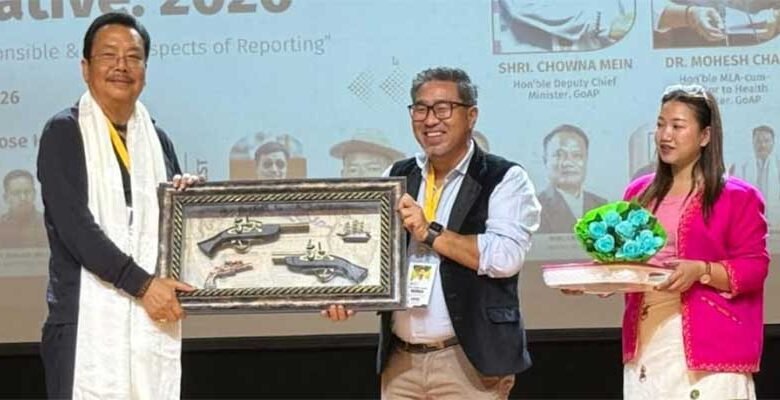
NAMSAI- Deputy Chief Minister Chowna Mein on Friday underscored the importance of responsible, ethical, and legally informed journalism while addressing a workshop organised by the Arunachal Pradesh Union of Working Journalists (APUWJ) in Namsai.
The workshop, held at the Multi-Purpose Cultural Hall under the Responsible Media Initiative 2026, focused on the theme “Responsible & Legal Aspects of Reporting” and brought together media professionals from across the state.

In his keynote address, Mein described journalism as a “public trust,” emphasising that citizens rely on the media for accurate and verified information. He noted that this trust places a significant responsibility on journalists to ensure factual and balanced reporting.
Also Read- Three Injured as Tree Falls on Vehicle in Dibang
Drawing from his decades-long public life, he reflected on the evolution of journalism in Arunachal Pradesh, recalling instances where reporters travelled through difficult terrain to uncover stories and hold institutions accountable. He described such efforts as central to strengthening democratic processes in the state.
At the same time, Mein expressed concern over emerging trends in the media landscape, where the pressure to publish quickly can sometimes override the obligation to verify information. He cautioned that the pursuit of viral content risks undermining accuracy, stating that “truth becomes the first casualty” in such situations.
Also Read- Sahiwal Cattle Distributed to Longding Farmers
He stressed that in an era of social media and instant information sharing, the role of professional journalists has become even more critical. While information may be widely available, he noted, the value of the press lies in providing verified, contextual, and reliable reporting.
Highlighting the socio-cultural diversity of Arunachal Pradesh, Mein warned that irresponsible reporting—particularly unverified or communal narratives—could have serious consequences in a region with complex inter-community relations. He urged journalists to assess whether their reporting serves public interest or risks inflaming tensions.
Also Read- NCC Cadets Trek Historic Baileys Trail in West Kameng
The Deputy Chief Minister also emphasised the importance of legal awareness in journalism. He urged reporters to familiarise themselves with laws such as the Press and Registration of Periodicals Act, the Information Technology Act, the Digital Personal Data Protection Act, and provisions relating to defamation, contempt of court, and reporting on sensitive cases involving minors or sexual offences.
He encouraged media organisations and APUWJ to invest in legal literacy, stating that journalists who understand the law are better equipped to perform their duties independently and responsibly.
Addressing the impact of technological change, Mein identified digital disruption, artificial intelligence, deepfakes, and misinformation as key challenges facing journalism today. He called on media houses to develop clear editorial guidelines for handling AI-generated content, verifying viral material, and distinguishing news from opinion.
Reaffirming the government’s stance, he said that the Arunachal Pradesh government supports a free and critical press, noting that constructive criticism contributes to better governance.
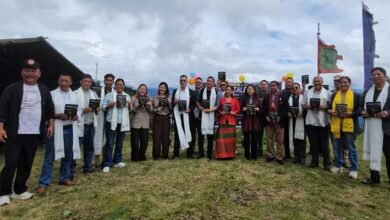
The event was attended by Lok Sabha MP Tapir Gao, Advisor Dr. Mohesh Chai, Deputy Speaker APLA Kardo Nyigyor, and ZPC Namsai Chow Sujana Namchoom, along with members of the media fraternity and other stakeholders.
Officials described the workshop as a platform for meaningful dialogue on strengthening ethical journalism practices in the state.