
Pema Khandu Calls for Buddha’s Teachings to Guide Global Peace Amid Rising Conflicts
Addressing an international conference in Tawang, the Chief Minister says compassion, wisdom and the Middle Path can help overcome growing global divisions and promote collective well-being.
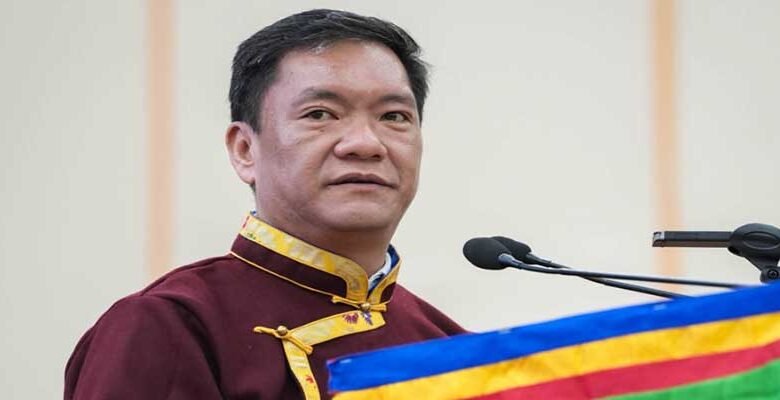
TAWANG: Calling for a renewed global commitment to compassion, wisdom and peaceful coexistence, Arunachal Pradesh Chief Minister Pema Khandu on Monday said the timeless teachings of Lord Buddha could offer a meaningful path towards peace in an increasingly divided world.
Addressing the inaugural session of the International Conference on “Buddhism: Dissemination in the Himalayan Region and Beyond” at Kalawangpo Hall in Tawang, Khandu emphasised that Buddhist philosophy holds particular relevance at a time marked by conflicts, intolerance and growing divisions across societies.

Speaking as the Chief Guest, the Chief Minister said the Buddha’s teachings of compassion, wisdom and the Middle Path provide a guiding framework for peace, harmony and collective well-being.
Also Read- Brokpa, Sartang and Bugun Cultural Heritage Documented in RCML Research Initiative
The conference is jointly organised by the Government of Arunachal Pradesh and the International Buddhist Confederation (IBC), with support from the Ministry of Culture, Government of India. It brings together religious leaders, scholars and experts from India and several other countries to discuss the spread and influence of Buddhism across the Himalayan region and beyond.
Highlighting Tawang’s spiritual significance, Khandu described the district as an important centre of Buddhist learning and heritage, with the historic Tawang Monastery serving as a beacon of Buddhist wisdom and tradition. He also pointed to the presence of the Sacred Relics of Lord Buddha in the town as an added reason for holding the international gathering in the region.
The Chief Minister said Buddhism should be understood not merely as a religion but as a way of life rooted in compassion, wisdom and the Middle Path.
Also Read- Anjaw KVK Showcases Traditional Crafts of Mishmi Community at Hayuliang
He further highlighted Arunachal Pradesh’s historical role in preserving and promoting Buddhist philosophy and cultural exchanges. According to Khandu, the monasteries, nunneries, temples and hermitages across Tawang and neighbouring areas are not simply places of worship but living institutions that have preserved generations of spiritual knowledge and cultural traditions.
Reaffirming the State Government’s commitment to protecting this heritage, Khandu stressed that development and modernisation must remain aligned with the region’s cultural and ecological values.
He also described Arunachal Pradesh’s Buddhist heritage as an important link connecting communities, nations and civilisations, adding that the international conference would provide an opportunity to explore ways of carrying Buddha’s message to future generations.
Also Read- Buddha’s Sacred Relics Return to Arunachal After 13 Years; Exposition Begins in Tawang
The inaugural programme began with a Mangalacharan performed by members of the Sangha. International Buddhist Confederation Secretary General Shartse Khensur Rinpoche Jangchup Choeden delivered the welcome address, followed by addresses from the Abbot of Tawang Gaden Namgyal Lhatse Monastery, Rev. Dramed Sungrab Tulku, and the President of the ABC.
The conference subsequently moved into panel discussions moderated by Prof. Moji Riba of Rajiv Gandhi University. The sessions featured speakers from Arunachal Pradesh, Sri Lanka, Myanmar, Delhi, Germany, Indonesia, Nepal and Malaysia, among others.
The participation of international scholars and spiritual leaders underlines the conference’s broader objective of examining Buddhism’s historical journey, cultural influence and continuing relevance in promoting dialogue and understanding across regions.






One Comment